DX named #1 in G2’s Spring 2026 Grid® for Software Development Analytics Tools
March 17, 2026 — DX, the leading platform for measuring and improving developer productivity, today announced it has once again been named in the #1 position in both the Spring 2026 G2 Grid® Report and the Results Index for Software Development Analytics Tools. DX also took the top User Satisfaction ranking in the Enterprise segment, underscoring its growing influence with engineering organizations of all sizes.
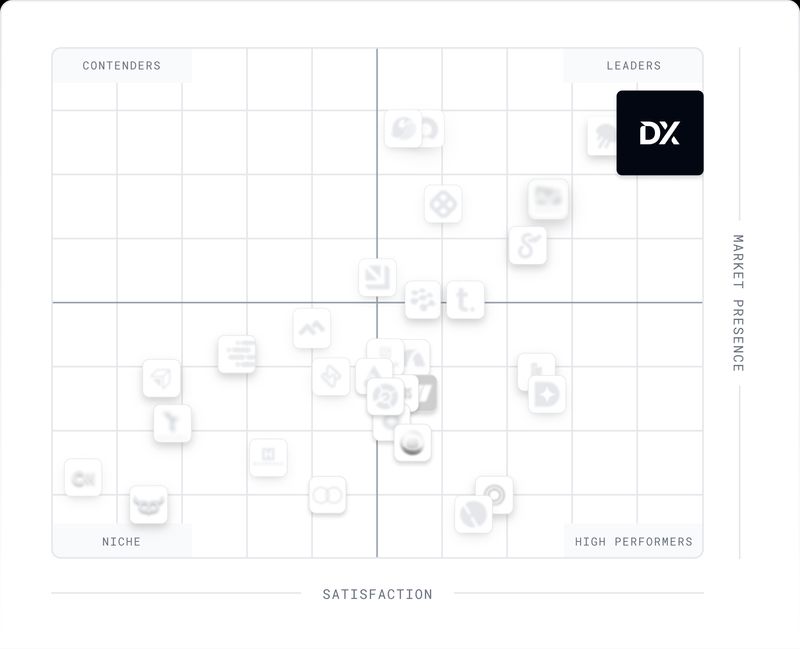
G2’s Grid® and Results Index draw exclusively from verified customer reviews and independent data sources, making them a gold standard for evaluating enterprise software. DX posted a Satisfaction score of 99 — the category’s highest, outpacing the nearest competitor by 7 points — and topped the Results Index with a score of 9.13. On the Grid itself, DX sits further right than any other vendor in the Leaders quadrant, a visual testament to where customers stand on the platform.
This quarter, DX swept the top honors:
- #1 for User Satisfaction — Software Development Analytics Tools (Overall & Enterprise)
- #1 Results Index Score — Software Development Analytics Tools
“We’re at an inflection point in how engineering organizations think about productivity. The teams winning right now are the ones that can measure developer experience, track AI adoption, and tie it all back to business outcomes. DX was built for exactly this moment, and this recognition is validation that we’re delivering,” said Greyson Junggren, DX co-founder.
G2 defines the Software Development Analytics Tools category as products that integrate with code repositories, consolidate development team progress data, and surface trends, KPIs, and bottlenecks to help engineering leaders improve efficiency and quality. Competitors in the space include Jellyfish, ServiceNow DevOps, LinearB, Swarmia, and Harness Platform.
Across 275 verified customer reviews, DX customers consistently pointed to the platform’s unified approach—combining telemetry, developer surveys, and AI measurement into a single system of record—as the reason their engineering organizations can finally connect productivity data to business impact.